
Can You See the Northern Lights in Scotland?
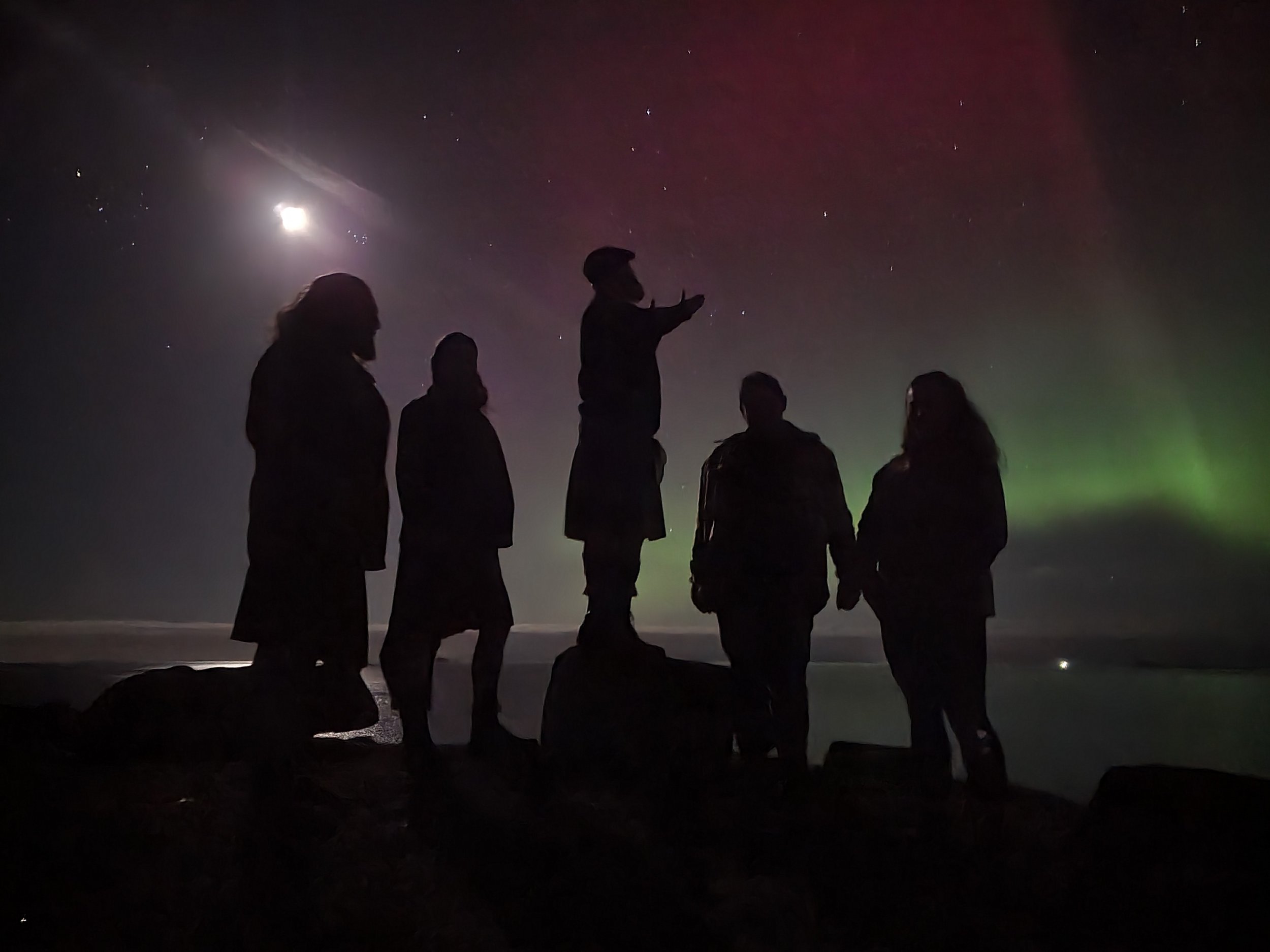
Our bearded and kilted Tartan Viking guides beneath a Scottish aurora.
Many international visitors associate the Aurora Borealis exclusively with Iceland, Norway, or Finland and are surprised to discover that the Northern Lights can indeed be seen from Scotland. The simple answer to that popular question is yes. However, the more useful and honest answer is that seeing them depends on several different factors coming together at the same time. Because Scotland sits south of the main Arctic auroral zone, displays are less dependable than they are farther north in Scandinavia, meaning you cannot schedule an aurora on demand. You can only put yourself in the best possible place when the conditions are right. To understand how to give yourself the best chance, it helps to know a little about what actually causes the Northern Lights. The phenomenon begins millions of miles away with activity from the Sun. As the NASA guide to aurora science explains, energetic particles ultimately interact with gases in Earth's upper atmosphere, producing the light that we see as an aurora. Different gases contribute different colours, with oxygen responsible for familiar greens and reds while nitrogen can contribute blues and pinks. That might sound a long way removed from planning a Scottish holiday, but it explains the most important thing to understand about seeing the Northern Lights here. They are a natural event driven by activity far beyond Scotland, so no tour guide, hotel or forecast can make them appear on a particular evening.
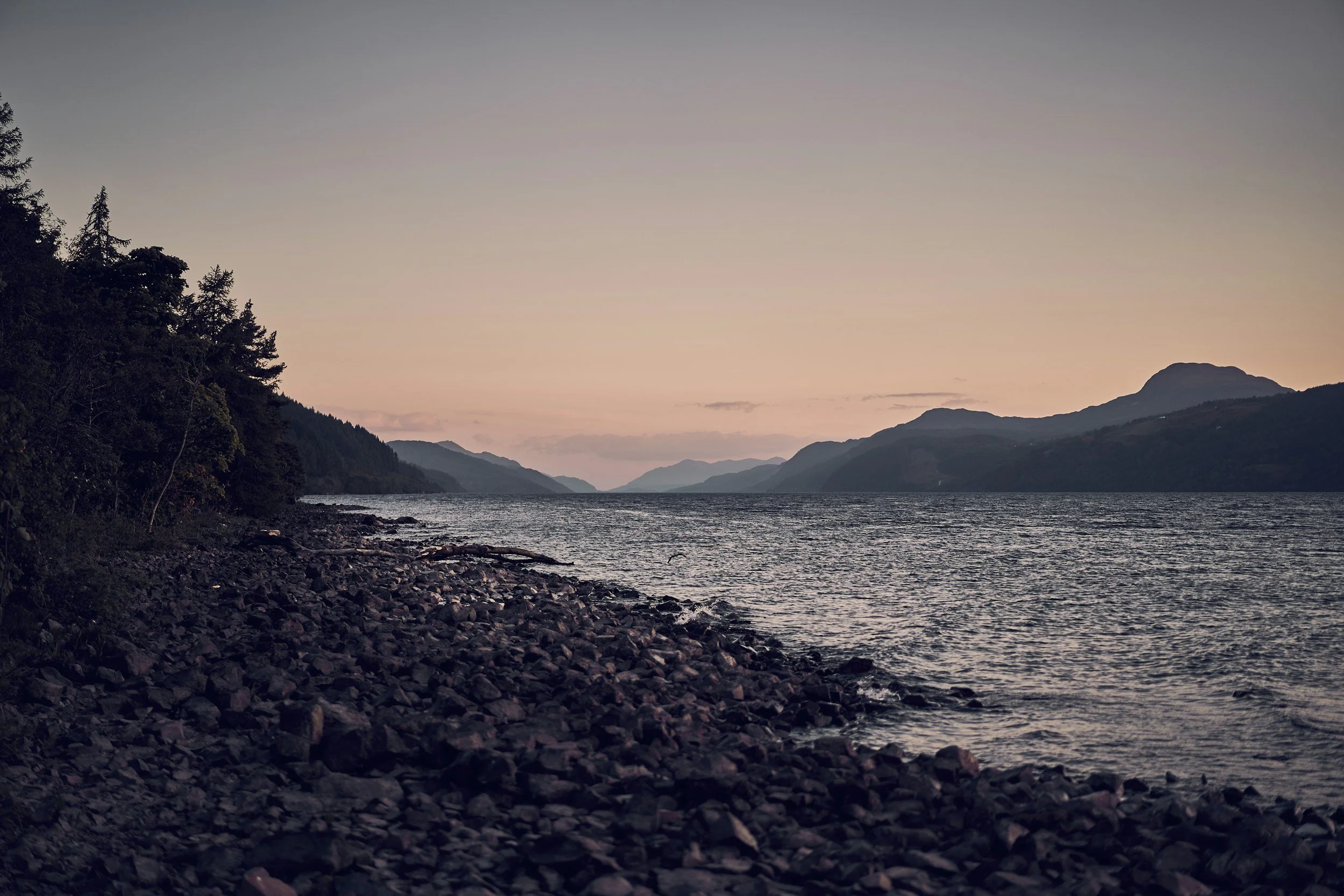
Scotland's lingering summer twilight can make faint aurora much harder to see.
Although auroral activity can occur throughout the year, actually seeing it is another matter. During June and July, northern Scotland has very short nights and lingering twilight, making faint aurora much more difficult to see with the naked eye. The Met Office highlighted exactly this problem during periods of increased solar activity in June 2026, when potentially favourable conditions coincided with very limited hours of true darkness in the north. The darker months are therefore much more practical, and the Met Office Northern Lights guide identifies the periods around the autumn and spring equinoxes, particularly September and October as well as March and April, as good opportunities for aurora activity in the UK. This is an important distinction because people sometimes talk about a Scottish "Northern Lights season" as though the aurora simply switches on when autumn arrives. It does not. Activity from the Sun can happen at any time of year, but autumn and winter give us much longer periods of darkness in which to see it. A strong display in June may struggle against Scotland's lingering summer twilight, while similar activity on a dark October or November night can be considerably easier to spot. If you have already read our guide to Is Autumn a Good Time to Visit Scotland?, this is another advantage of those lengthening September and October nights. Where you are in Scotland matters too. Travelling farther north generally improves your chances, while low light pollution and a clear view towards the northern horizon can make a considerable difference. Shetland, Orkney, Lewis and Harris, Caithness and Wester Ross are among the locations highlighted by the VisitScotland Northern Lights guide, although being in a good location never guarantees a display.
Fortunately, travelling as far north as Shetland or Orkney is not essential, which brings us to a question particularly relevant to visitors staying in Edinburgh. Can you see the Northern Lights from the capital? Occasionally, yes. During sufficiently strong geomagnetic activity, aurora can reach surprisingly far south and has been visible from Edinburgh. VisitScotland identifies places including Calton Hill, Blackford Hill and Arthur's Seat as possible viewing locations, although the city's light pollution naturally makes faint displays harder to see.
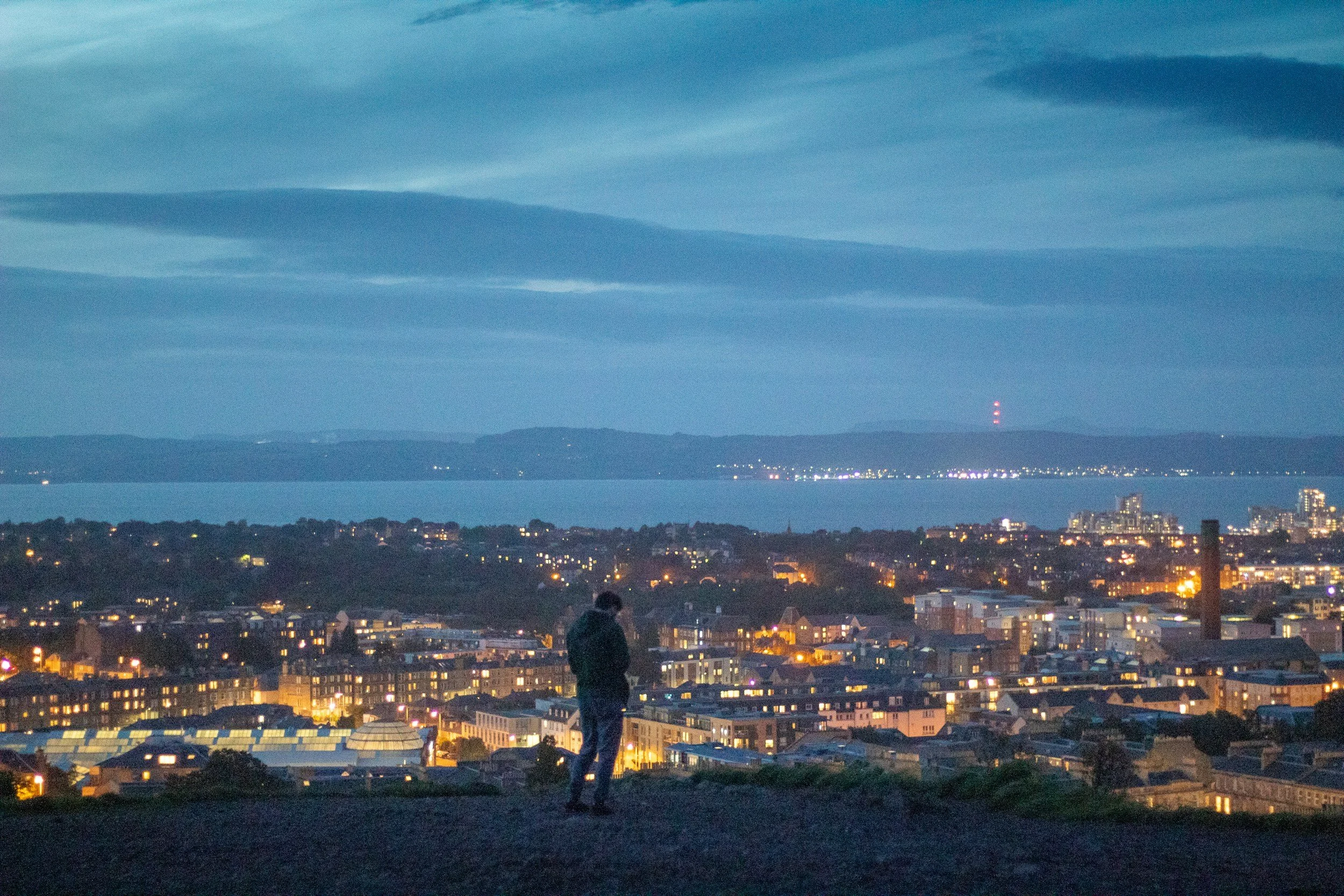
Cloud cover can make all the difference when trying to see the Northern Lights from Edinburgh.
A subtle glow that is noticeable beneath a genuinely dark rural sky may be almost invisible among streetlights, buildings and the general glow of a city. However, if a strong alert appears while you are staying in Edinburgh, that does not mean you should immediately jump into a car and drive for four or five hours towards the Highlands. Aurora activity can strengthen and weaken remarkably quickly, and by the time you arrive the conditions that prompted the journey may have changed completely. Checking local cloud cover and current geomagnetic activity first is much more sensible, and during a particularly strong event simply finding a safe location with darker surroundings and a clearer northern horizon may be enough. Moving away from Scotland's cities does nevertheless open up considerably darker skies, which is where the Highlands and islands become particularly interesting. Our own itineraries frequently take guests into these areas, and places around Skye can offer wide horizons with very little artificial light. Our guide to visiting the Isle of Skye covers the island in much more detail, while locations such as Staffin Bay and the Trotternish peninsula are among those associated with northern views and dark surroundings. There is, however, one very Scottish complication. A beautifully dark location underneath a thick blanket of cloud is still just a dark location underneath thick cloud. Someone considering driving from the capital specifically in search of clear skies should also remember that Skye is not just up the road from Edinburgh. As our guide explaining how to get to the Isle of Skye from Edinburgh shows, it is a substantial journey that deserves proper planning rather than an impulsive late-night drive because your phone has suddenly sent you an aurora notification.
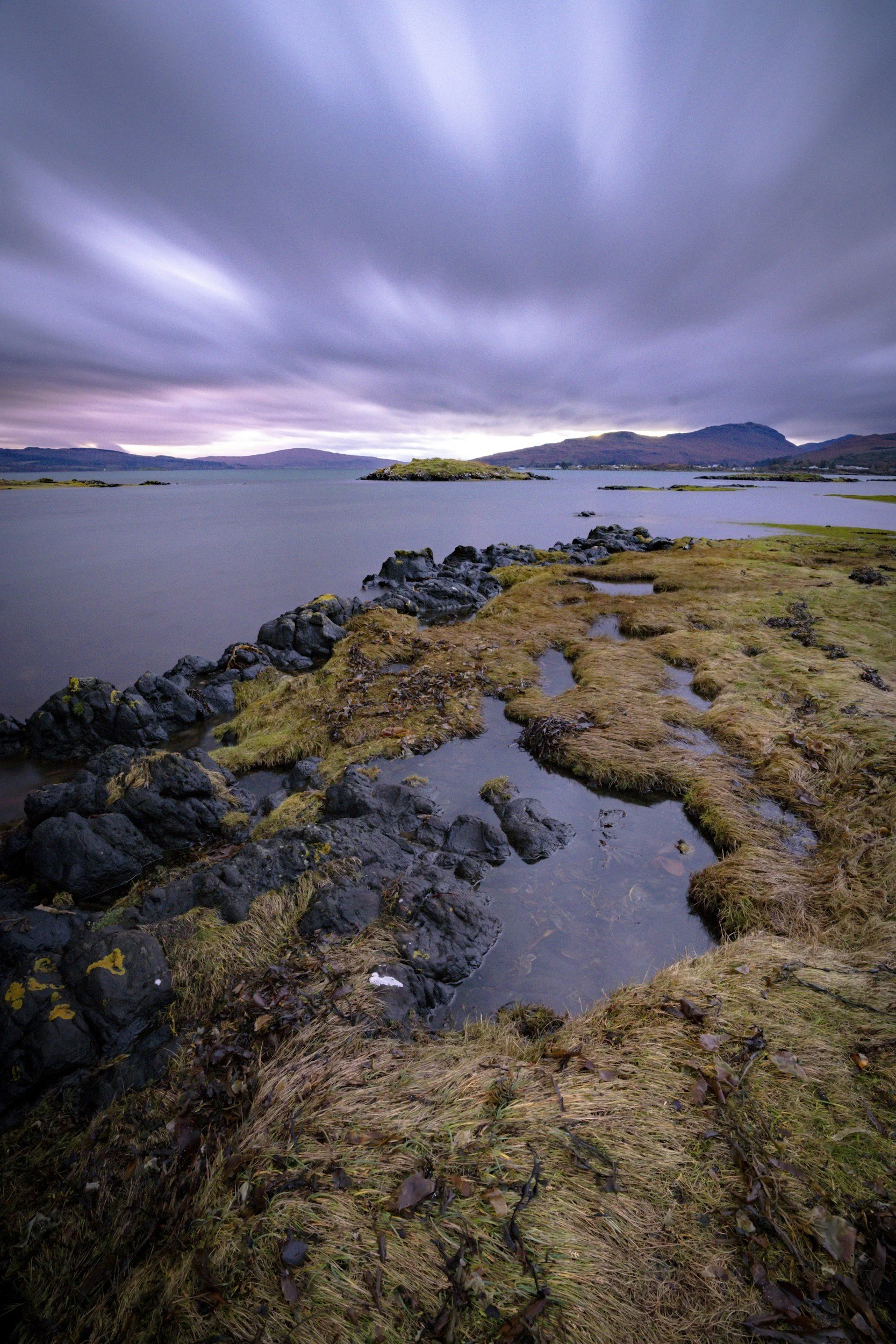
Faint aurora can be much more subtle than the dramatic displays often seen in photographs.
That balance between space weather and ordinary Scottish weather is ultimately what determines whether you will see anything. You need sufficient geomagnetic activity, enough darkness away from strong artificial light, a useful viewing direction and reasonably clear skies. The Met Office highlighted this problem several times during 2026 when potentially favourable space weather coincided with cloud, rain or limited darkness across parts of the UK. Even an excellent aurora forecast cannot do much for you if Scotland's weather has decided to put several thousand feet of cloud between you and the sky. Fortunately, you do not need to spend every clear evening standing outside staring hopefully towards the north. AuroraWatch UK, operated by scientists at Lancaster University's Space and Planetary Physics group, provides a particularly useful colour-coded alert system based on geomagnetic activity measured in the UK. A yellow alert means aurora may be visible by eye from Scotland, while amber indicates stronger potential and red represents activity capable of producing much more widespread UK visibility. An alert is therefore a reason to investigate rather than a guarantee that green lights will be dancing above your hotel the moment you walk outside. Check whether the alert is still active, look at the local weather and cloud cover, and if everything appears promising find somewhere safe with as little artificial light as reasonably possible. Give your eyes time to adjust and look towards the north, particularly during weaker displays when the aurora may sit relatively low on the horizon. Furthermore, while the hours around 10 PM to midnight can statistically be productive, there is no fixed appointment time for the Northern Lights. Activity can strengthen or weaken throughout the night. The Met Office space weather forecast and NOAA Space Weather Prediction Center provide additional short-range information, and you may also hear people talking about the Kp index, which measures geomagnetic activity on a global scale. A higher Kp value can indicate greater potential for aurora to become visible farther south, but it should never be treated as a promise for one particular Scottish location. Cloud, darkness, artificial light and the behaviour of the aurora itself still have a say.
Even when the forecasts look promising, the sky is clear and you have found somewhere properly dark, what you actually see may surprise you. Photographs have conditioned many of us to expect enormous curtains of electric green and purple filling the sky, and particularly strong displays genuinely can be spectacular to the naked eye. Weaker aurora, however, can be much more subtle. The first sign might be a pale or greyish glow towards the north, something resembling a thin cloud that does not seem to behave quite like the other clouds around it, or faint vertical structures that become more obvious as your eyes adjust. This is where your phone can be surprisingly useful. If you are looking at something and wondering whether it is cloud or the beginning of an aurora, taking a photograph using night mode while holding the phone as steadily as possible may reveal far more colour. The NASA guide to finding and photographing auroras explains that modern digital cameras and smartphones can record aurora too faint for the naked eye to see clearly.
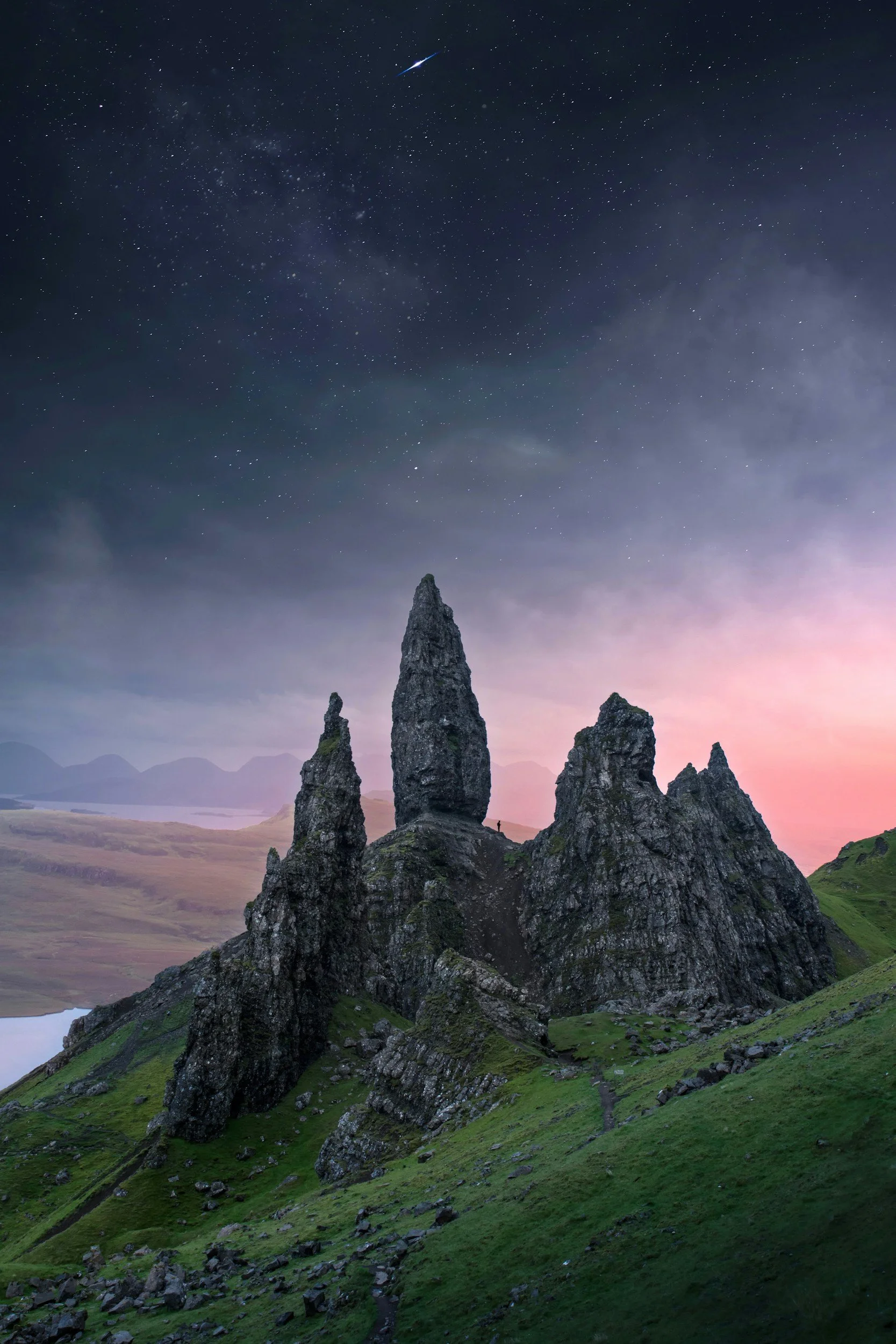
Even without the Northern Lights, a clear night beneath Scotland's dark skies can be worth staying out for.
A photograph might therefore reveal greens, pinks or other colours that you were struggling to distinguish while standing there. This does not mean the spectacular aurora photographs shared online are necessarily fake. Cameras simply collect faint light differently from our eyes, and the Met Office guidance on auroras similarly explains that distance from the main auroral belt, twilight and light pollution can all affect what we perceive. During a strong display you may see obvious colour and movement yourself, while on another night your phone may be the thing that confirms the faint glow in front of you really is the Northern Lights. Moreover, even if the aurora refuses to cooperate, being somewhere genuinely dark on a clear Scottish night need not feel like a wasted evening. The Galloway International Dark Sky Park and the Isle of Coll, recognised by DarkSky International, are good examples of just how dark Scotland's skies can become away from major centres of population. Stars that disappear completely above Edinburgh become obvious, and on the right night the wider sky can be worth looking at regardless of whether the aurora makes an appearance. It is one of several reasons we think winter is an underrated time to visit Scotland.
You certainly can see the Northern Lights in Scotland, but perhaps the best way to approach them is not to make them responsible for the success or failure of your trip. Enjoy Scotland during the day and, once darkness arrives, keep an eye on AuroraWatch, the Met Office forecast and the cloud above you. If the conditions begin to line up, find somewhere safe and reasonably dark, wrap up properly using the same sort of preparation we recommend in our guide to what to know before travelling to Scotland, and have a look. You may see nothing more than stars, you may discover that the strange pale patch above the northern horizon turns green through your phone camera, or you may be lucky enough to watch a much stronger display develop above you. That uncertainty is simply part of seeing the Aurora Borealis from Scotland.
Nobody can order it for a particular night, and nobody should promise that they can. However, when the Sun, darkness, clear Scottish skies and a little good fortune all come together, you might find that you did not need to travel to Iceland or northern Norway after all.