
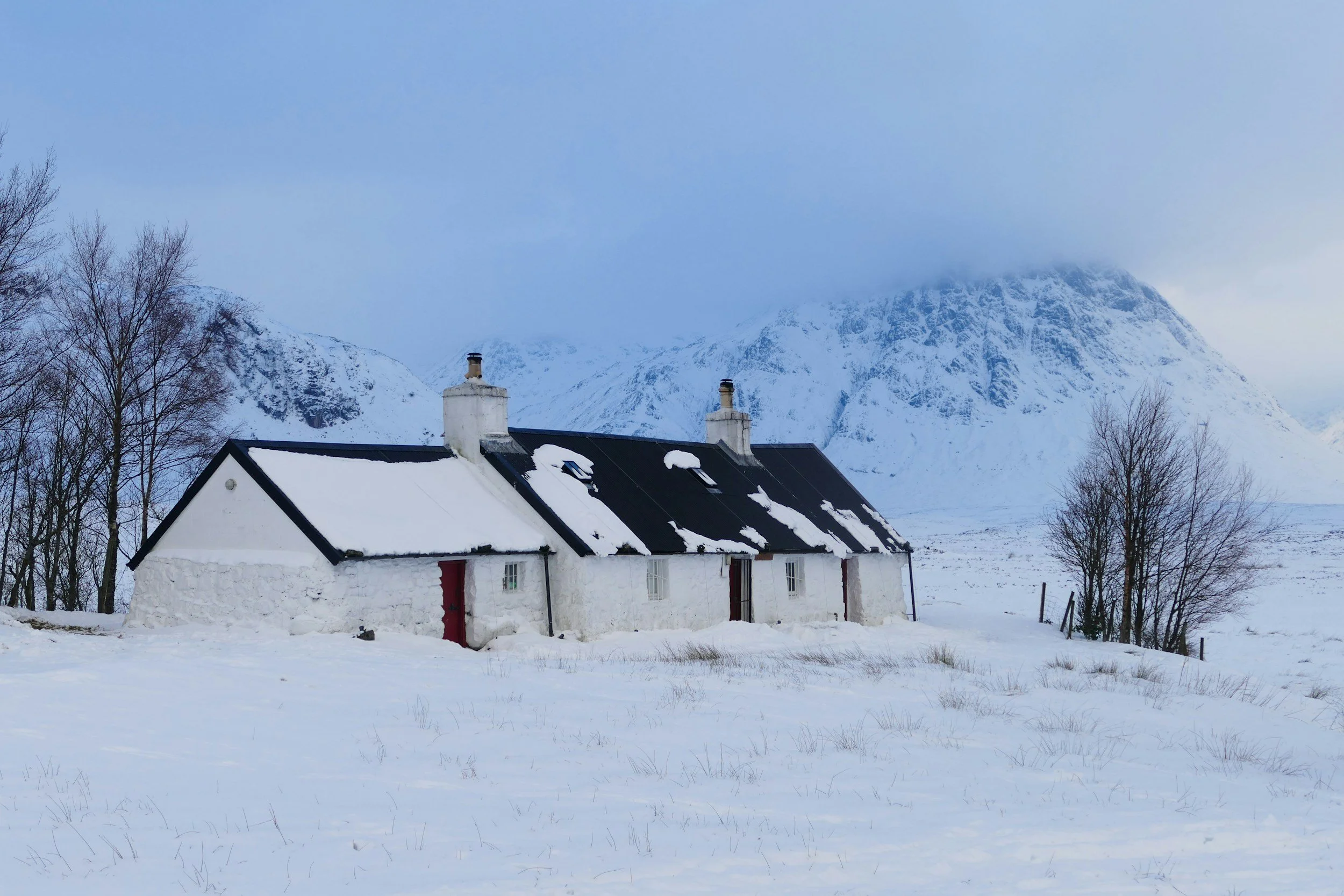
The famous white cottage in Glencoe is officially known as the Lagangarbh Hut (frequently called the Wee White House)
Many visitors arrive in Scotland during winter hoping to see snow-covered mountains, frozen lochs and Highland villages surrounded by white landscapes. Although these scenes are certainly possible, the reality of a Scottish winter is considerably more varied. Scotland experiences snowfall regularly during the colder months, but that does not mean the entire country is covered in snow from December until spring. Conditions can differ substantially depending on location, altitude and the weather systems moving across the country. It is entirely possible to spend a winter morning walking through Edinburgh without seeing a single snowflake, while mountains a few hours farther north are covered in snow. Understanding these differences is particularly useful for anyone planning a Scottish holiday around winter scenery, especially when there are other places and activities they hope to experience along the way.
According to the Met Office's guide to snow, Scotland averages approximately 23 days of lying snow annually, based on observations from 1991 to 2020. This refers to snow remaining on the ground rather than simply falling from the sky, and the national figure conceals considerable differences between locations. The Cairngorm Chairlift observation site, for example, records an annual average of around 75 days of lying snow, while nearby Highland settlements experience their own distinct conditions. Snow can fall without settling, particularly when temperatures are only just above freezing or the ground is relatively warm. Equally, snow that has accumulated higher in the mountains may remain visible long after it has disappeared from the valleys below. For visitors, this distinction matters because seeing snow on the Scottish mountains is often a more realistic expectation than finding the streets and fields around their accommodation covered in it.
The question of timing is equally important. As VisitScotland explains in its weather guide, December, January and February are generally Scotland's coldest months, although snowfall is also possible during November and March, and can persist considerably later at higher elevations. January and February are sensible months to consider if snowy conditions are a priority, but there is no particular week when snowfall can be relied upon. A cold spell may bring several days of snow, followed by milder Atlantic weather that quickly changes the landscape. Scotland's winters can include frost, sunshine, rain, strong winds and snow within a relatively short period, so choosing the right month improves the possibilities without guaranteeing the outcome.
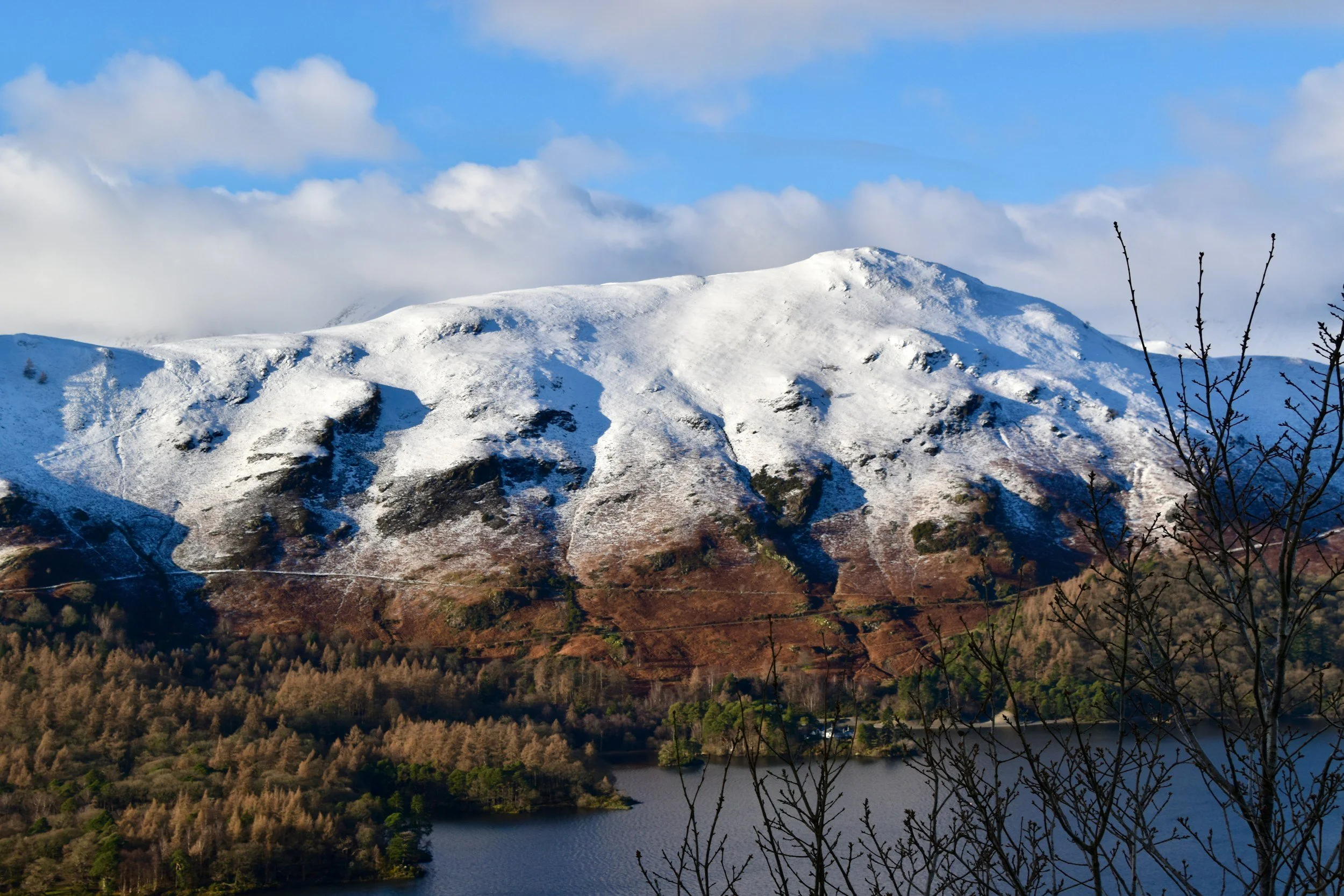
The Cairngorms in winter
Geography is often a more useful guide than the calendar when deciding where to look for snow. As altitude increases, temperatures generally fall, meaning precipitation that arrives as rain in a Highland glen may fall as snow on the surrounding mountains. This explains why some of Scotland's most recognisable winter landscapes feature white summits above green fields and clear roads. The Cairngorms are among the most promising areas for visitors hoping to see snowy mountain scenery, with Aviemore providing a practical base for exploring the surrounding region. The town itself may be free of snow while the higher slopes of Cairngorm Mountain remain white, so it is worth distinguishing between staying near the mountains and actually encountering snow at ground level. Farther south, Glenshee and the mountains around Braemar can also experience substantial winter snowfall, while Glencoe offers a different setting in the western Highlands. Here, the Three Sisters and Buachaille Etive Mòr can look markedly different after fresh snow, even when the A82 through the glen is clear. Visitors already considering this part of the country can learn more about the wider area in our guide to Loch Ness, Glencoe and the Glenfinnan Viaduct.
By contrast, Edinburgh and Glasgow generally experience less persistent snow than Scotland's higher mountain areas. Edinburgh certainly receives snowfall, and occasionally enough to disrupt daily life, but snow may melt quickly or turn to slush as temperatures rise. A similar contrast exists on the Isle of Skye, where the Cuillin mountains can be covered in snow while coastal villages and lower roads remain clear. The island's maritime climate and exposed location mean that winter conditions are not always what visitors expect from photographs of its mountains. Anyone planning to explore Skye during the colder months should consider these differences alongside the practical advice in our guide to visiting the Isle of Skye.
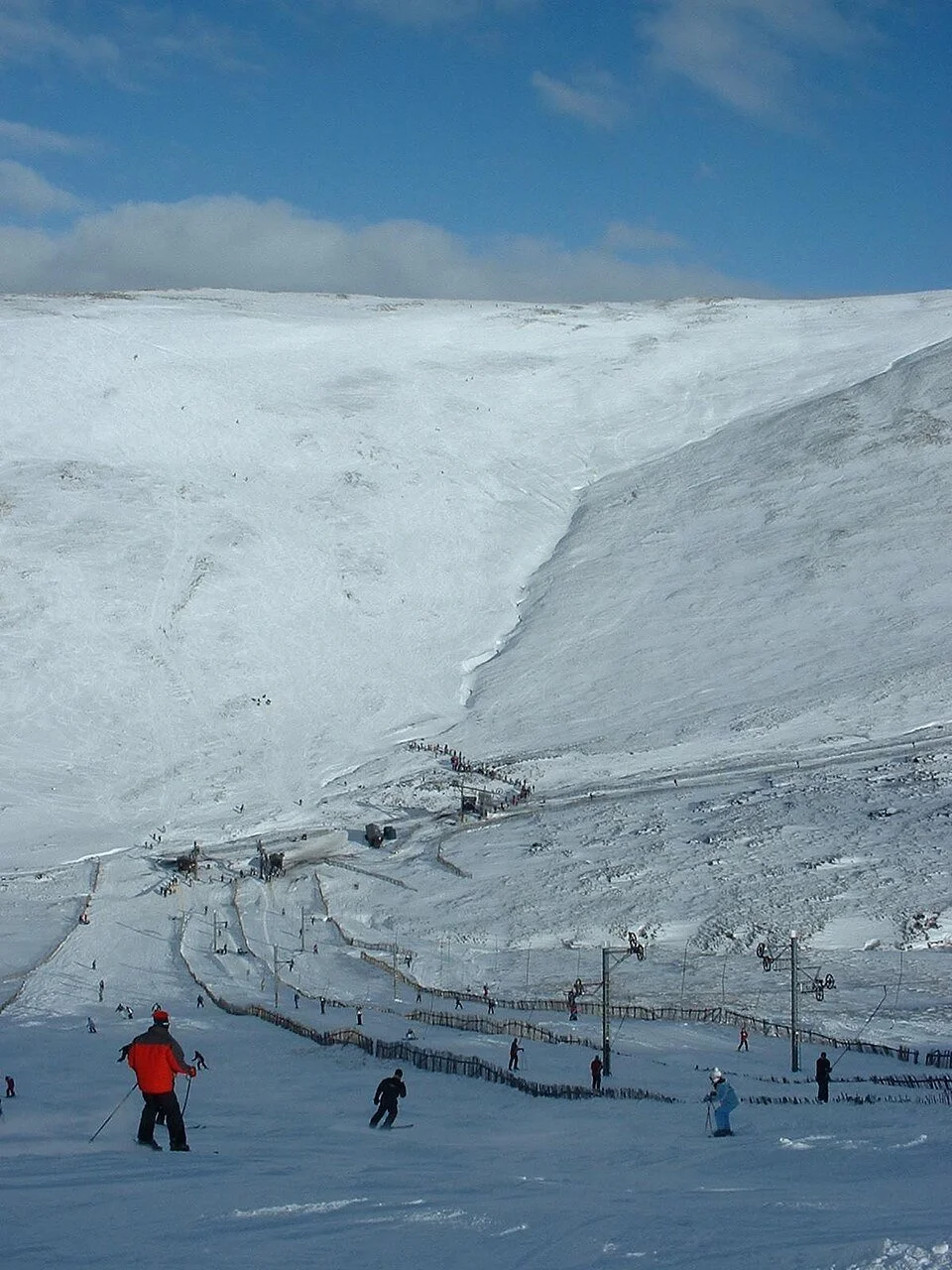
Coire Fionn and Glas Maol Poma, Glenshee Ski Centre, Scotland
One aspect of Scottish winter travel that sometimes surprises international visitors is that the country has five established mountain ski centres. According to VisitScotland's guide to skiing and snowsports, these are Glenshee, Cairngorm Mountain, Glencoe Mountain Resort, Nevis Range and the Lecht. Their locations make them particularly interesting for travellers already planning to explore the Highlands. Cairngorm Mountain is close to Aviemore, while Glenshee Ski Centre lies along the mountain road between Highland Perthshire and Deeside. Glencoe Mountain Resort is situated in one of Scotland's best-known mountain landscapes, and Nevis Range provides opportunities for snowsports on Aonach Mòr near Fort William. Farther east, the Lecht is another option, particularly for beginners and families. Scotland's centres provide slopes for different abilities, with beginner lessons and equipment hire available subject to individual operating arrangements. However, Scottish skiing is much less predictable than skiing in many established Alpine destinations. Natural snow cover, strong winds, changing temperatures and lift conditions all influence whether a particular centre can operate. Someone visiting Scotland in February should not assume that every slope will be open simply because it is winter. Checking official snow reports, forecasts and lift updates is therefore essential before making plans.
Scotland also has a longstanding tradition of winter mountaineering and climbing, particularly around Ben Nevis, Glencoe and the Cairngorms. Visitors interested in ice climbing or learning winter mountain skills can investigate professionally instructed activities, although these are quite different from ordinary sightseeing. Snow-covered mountain terrain requires specialist knowledge and equipment, and beginners should not attempt technical winter routes independently. Mountaineering Scotland provides guidance on winter mountain safety, while Glenmore Lodge, Scotland's National Outdoor Training Centre near Aviemore, offers specialist instruction and training. The suitability and availability of particular activities should always be checked in advance.
Winter activities in Scotland are not limited to skiing and mountaineering, and visitors do not necessarily need to travel into the mountains to enjoy the season. Around Aviemore, for example, families can explore organised wildlife experiences, visit the Cairngorm Reindeer Herd or investigate outdoor activities at Rothiemurchus, including archery and encounters with Highland animals. The forests surrounding Loch Morlich also offer opportunities for shorter walks, while Glencoe Lochan provides a woodland setting for visitors exploring the western Highlands. For those hoping for a more active experience, guided snowshoeing or an introductory winter skills session may be possible when conditions and suitable instruction are available. These activities differ considerably in the time, fitness and preparation they require, and not all depend on snowfall. This makes them worth considering even when the weather is too mild for skiing.
Such experiences can be particularly useful when planning a longer Scottish journey with children or a group whose interests differ. A family travelling through the Cairngorms might choose to spend part of the day exploring the landscape before visiting a wildlife attraction or trying an organised outdoor activity. Those heading towards Fort William could consider a mountain gondola ride at Nevis Range, while a short walk around Glencoe Lochan might provide a welcome break between longer stretches of sightseeing. Rather than treating these as separate holidays or major diversions, they can sometimes be incorporated into a wider itinerary that also includes castles, historic towns and Highland scenery. The practical considerations are important, however. Some activities require advance booking, have minimum age restrictions or depend on seasonal opening arrangements, while others may be unsuitable during periods of severe weather. Allowing time for them when planning the journey is generally more sensible than trying to fit them into an already busy day. The interactive map below brings together Scotland's mountain ski centres and a selection of winter activities that visitors may wish to consider when planning a Highland itinerary.
Select a numbered pin to explore activities and open the official website. Availability and winter conditions vary.
Incorporating these experiences into a wider Scottish holiday depends on the route, the time available and the season's shorter daylight hours. Someone spending a week exploring castles, historic towns, lochs and Highland scenery may have more opportunities to include an outdoor activity than a visitor attempting to cover the same distance in three or four days. Our article on how many days you need in Scotland explores how the length of a holiday influences what can realistically be included, and the same principle becomes even more important in winter. Daylight is limited during the shortest part of the year, with Edinburgh receiving only around seven hours of daylight in late December and locations farther north experiencing slightly less. Longer Highland journeys therefore need careful consideration, particularly when visitors want time to stop, explore and enjoy the scenery rather than spend most of the available daylight travelling.
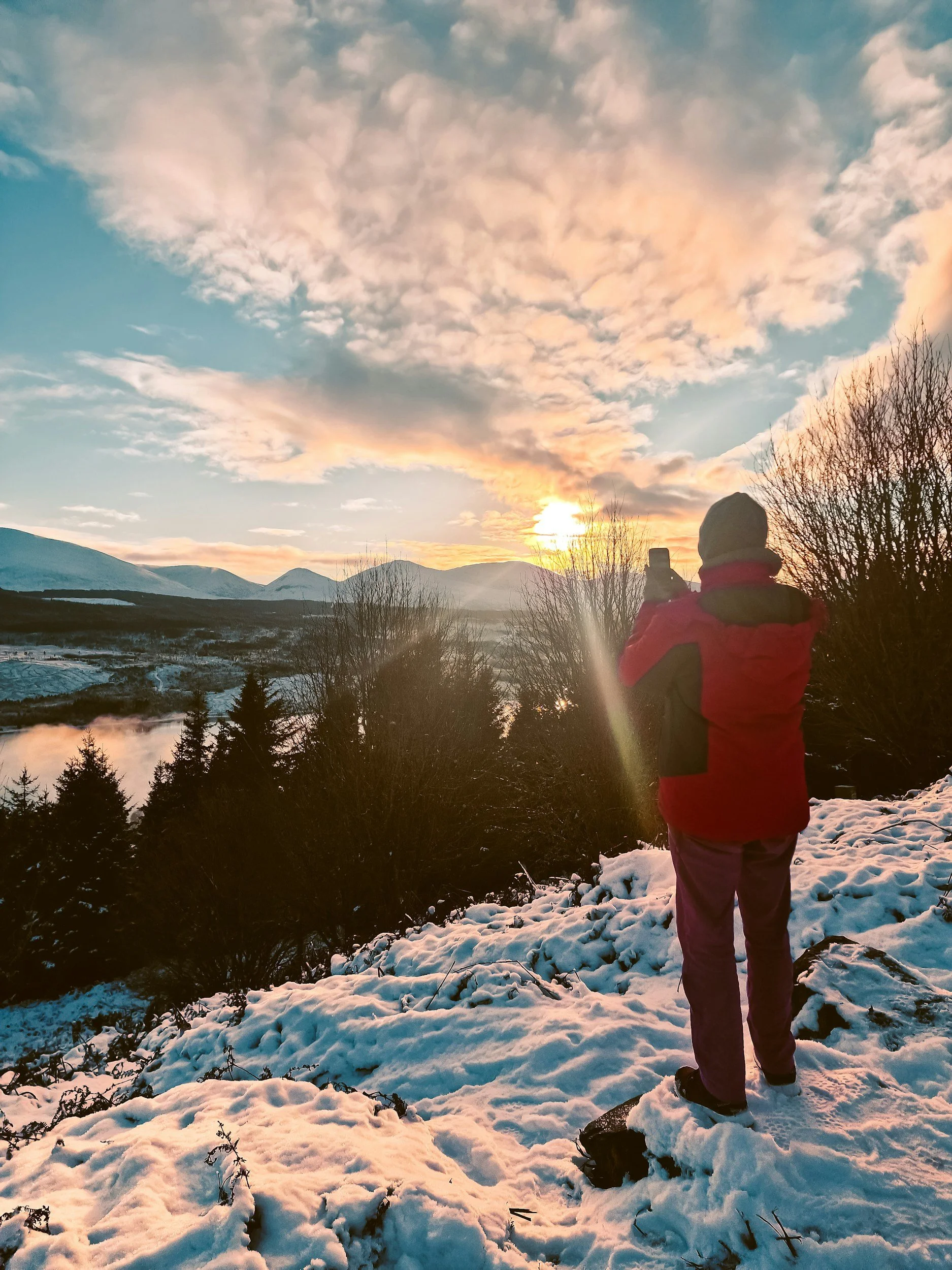
A moment of calm in winter Scotland.
Winter road conditions can also affect plans. Although Scotland's main routes receive winter maintenance, snow, ice and severe weather can still cause delays or closures, particularly in mountainous areas. Checking Traffic Scotland for road information and the Met Office mountain forecasts for conditions in upland areas is sensible before setting out. For visitors unfamiliar with Scotland's roads, our comparison of private and group tours also offers a useful starting point when considering different ways to explore the country. A bespoke itinerary may offer greater scope to account for the ages, interests and preferred pace of the people travelling, although activity bookings, seasonal availability and weather conditions still need to be considered. Ultimately, the aim should be to plan a journey that allows enough time for the places and experiences that matter most, while recognising that winter weather may require some flexibility.
Scotland's winter scenery can be at its most striking after fresh snowfall, particularly when the mountains are white and the surrounding glens remain accessible. Yet a successful winter holiday does not depend on finding snow every day. The Highlands, islands and historic towns remain worth exploring through the colder months, and a clear winter morning can be just as rewarding as one spent watching snow fall. For anyone hoping to see snow in Scotland, the higher mountain areas around the Cairngorms, Glenshee and Glencoe are sensible places to consider, particularly during the main winter months. Whether the trip includes a day on the slopes, a wildlife encounter, a guided outdoor activity or simply time exploring the landscape, realistic expectations and a flexible itinerary will make the experience more enjoyable. Scotland may not deliver the winter weather visitors imagine on every occasion, but there is plenty to discover regardless of what the forecast brings.